
unit axial compressive strength of basalt rock manufacturer Grasping strong production capability, advanced research strength and excellent service, Shanghai unit axial compressive strength of basalt rock supplier create the value and bring values to all of customers.
 WhatsApp)
Overall, axial compressive strength for Pacaya basalt ranges widely from 12 to 174 MPa (Table 3), with the lower end falling into strength categories as low as chalk . Given that the porosity of the rocks scales with permeability, we chose to assess the relationship of UCS with permeability, as this measures the strong control that cracks have ...
Empirical relations between rock strength and physical properties in sedimentary rocks Chandong Chang a,⁎, Mark D. Zoback a,1, Abbas Khaksar b,2 a Department of Geophysics, Stanford University, Palo Alto, CA 94305-2215, USA b GeoMechanics International, Inc., Perth, WA 6000, Australia Received 1 April 2005; received in revised form 27 November 2005; accepted 11 January 2006
Unconfined compressive strength Granite 100-250 MPa Basalt 100-300 MPa Quartzite 150-300 MPa Sandstone 20-170 MPa Shale 5-100 MPa Limestone 30-250 MPa Marble 35-60 MPa Slate 100-200 MPa Quartzite 150-300 MPa Concrete 14-42 MPa High strength concrete 70 MPa Steel 250 MPa Wood 5 MPa Field test for compressive strength of soils and rocks
A1. Strength of Intact Rock Material ( see Field Estimates) Point-Load Strength Index > 10 MPa 4 - 10 MPa 2 - 4 MPa 1 - 2 MPa For this low range - uniaxial compressive test is preferred: Uniaxial Compressive Strength > 250 MPa 100 - 250 MPa 50 - 100 MPa 25 - 50 MPa 5 - 25 MPa 1 - 5 MPa < 1 MPa Rating J A1: 15: 12: 7: 4: 2: 1: 0
rock strength and the normal stress. As the nor-mal stress increases, the asperities are progres-sively sheared off and the total friction angle diminishes (see Section 2.2). Fractured rock mass: The shear strength of a fractured rock mass, in which the rupture surface partially lies on fracture surfaces and
UNIAXIAL COMPRESSIVE STRENGTH OF ROCK MATERIALS 1. SCOPE This method of test is intended to measure the uni- axial compressive strength of a rock sample in the form of specimens of regular geometry. The test is mainly intended for strength classification and characterization of intact rock. 2. APPARATUS (a) A suitable machine shall be used for ...
sistent with those of similar rocks as reported in the standard literature (e.g., Birch, 1966, p. 160). For very brittle rocks like basalt, the ultimate com-pressive strength is equivalent to the peak differential stress (σ - σ 3) at macroscopic failure. Relative ductility is defined as the total axial .
The Unconfined Compression Test is a laboratory test used to derive the Unconfirmed Compressive Strength (UCS) of a rock specimen. Unconfirmed Compressive Strength (UCS) stands for the maximum axial compressive stress that a specimen can bear under zero confining stress. Due to the fact that stress is applied along the longitudinal axis, the ...
The mean values of uniaxial compressive strength of the tested rocks are listed in Table 2. The strength values range from a low of 9.16 MPa for Marl to a high of 101.08 MPa for Sakessar Massive Limestone. The coefficient of variation ranges from 10.3 % to 37.7%.
Rock mass strength is defined by three parameters including unconfined compressive strength of intact basalt and two others related to the degree of fracturing of the material. Experimental results for elevated temperature extend the applicability of these parameters to the near‐surface environment of .
The rock hardness of basalt is 6 on the Mohs scale, and can be seen through a combination of its compressive strength: 100-300 Mpa (Megapascal), its tensile strength: 10-30 Mpa, and its shear strength: 20-60 Mpa, which denotes that depending on the mineral makeup, basalt rocks fall in the strong – very strong category.
This study investigated the influences of volumetric basalt fiber dosage and recycled coarse aggregate replacement rate on the flexural performance of.
4.1 Based on the measurements of force and displacement at the pile top, possibly combined with those from accelerometers or strain transducers located further down the pile, these test methods measure the pile top deflection in response to an axial compressive force pulse. The relatively long duration of the force pulse compared to the natural period of the test pile causes the pile to ...
Unconfined compressive strength (UCS) tests were conducted on specimens fitted with axial and radial strain gauges using a stress-controlled unconfined compression apparatus following ASTM standard method. UCS values range between 165 and 232 MPa for the trachyte and basalt samples; rhyolite UCS values range between 122 and 126 MPa.
wireline rock coring techniques. The strength of intact rock specimens were evaluated in the laboratory unconfined compression (ASTM D7012) and point load testing (ASTM D5731). On 27 specimens, the elastic modulus of the intact rock core, E i, and the unconfined compressive strength of the intact rock, q ui, was established by performing ...
In the rock mechanics literature, some empirical relations exist between the elastic modulus of intact rock and other rock properties, such as the uniaxial compressive strength (σci), unit weight ...
Table 1 Icelandic basalt classified according to rock engineering properties, Jónsson (1996). Field mapping of Iceland-ic basalts1 Proposed geo-technical field mapping of basalt Structural and mechanical properties Scoria content Common thichness of lava unit (m) Common UCS strength2 (MPa) Tholeiite basalt >200 Tholeiite, thin layered (from
A study of strength and deformation measurements for basaltic rocks, along with consideration of the influence of fracturing using a rock mass classification system, documents the range of brittle response for basaltic rock masses. Although basalts vary widely in composition and other physical factors, many of the properties of a basaltic rock mass appear to vary within a factor of about 10.
axial compressive strength of rock materials hasbeendeveloped tosuch adegreeofreliability that standard-ized test procedures have been pre-pared7, andtheloading apparatus is commercially available. However, theequipment issimple tomake, as canbeseenfrom Plate I. Broch andFranklin proposed5 the
Compressive Strength!! Tensile strength = resistance to failure under tensile stress ! Typically much lower than compressive strength • 10% of compressive strength typical (Table 7.2) ! Horizontal rock beams can be dangerous because of the weak tensile strength – rock unit must be homogeneous and composed of resistant minerals
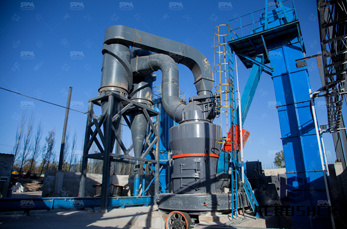
The results show that the conventional triaxial compressive strength (CTCS) of basalt samples decreased linearly with microwave exposure time, and the higher the confining pressure, the smaller the reduction in the strength of basalt samples after microwave treatment.
testing procedure used for the calculation of a rock strength index. This index can be used to estimate other rock strength parameters. The focus of this paper is to present the data analysis used to correlate the point load test index (Is50) with the uniaxial compressive strength (UCS), and to propose appropriate Is50 to UCS conversion factors ...
with a geological hammer Fresh basalt, chert ... is defi ned as the maximum axial compressive stress ... Method for Unconfined Compressive Strength of Intact Rock Core Specimens, in ASTM ...
Compressive behavior of Basalt Fiber Reinforced Composite. basalt fiber on compressive strength was carried out for M20 & M30 grade concrete (Arivalagan,2012). In this study, basalt fiber was found to increase compressive strength of concrete. Scanty literatures are available for generalizing the effect of basalt fiber on compressive strength ...
WhatsApp)
 Online Chat
 Sales Hotline