
cementation of iron on zinc manufacturer Grasping strong production capability, advanced research strength and excellent service, Shanghai cementation of iron on zinc supplier create the value and bring values to all of customers.
 WhatsApp)
Research Highlights Copper cementation limitation by mass transfer on iron and zinc is confirmed. Electrode potential evolutions point out cathodic surface increases, implying a kinetic acceleration. Zinc is the main target of dihydrogen evolution and thus lessens iron corrosion.
Synthesis of Iron / Aluminium Substrate for Copper Cementation @inproceedings{TottippumirukSynthesisOI, title={Synthesis of Iron / Aluminium Substrate for Copper Cementation}, author={Arunwan Tottippumiruk and Pongthon Roongcharoen and Dawan Wiwattanadate} }
Copper Precipitation Cementation using Scrap Iron. In the search for lower cost methods of recovering copper, the use of sponge iron or particulate iron (as distinguished from iron powder used in powder metallurgy) as precipitants in place of tin cans, detinned scrap iron, or scrap iron .

In this study, the cementation of copper ions on iron and zinc as sacial metals in a fluidized bed configuration was carried out. A preliminary hydrodynamic study checked the non-segregating behaviour of iron/zinc mixtures during fluidization experiments.
Cementation (metallurgy) explained. Cementation is a type of precipitation, a heterogeneous process in which ions are reduced to zero valence at a solid metallic interface. The process is often used to refine leach solutions.. Cementation of copper is a common example. Copper ions in solution, often from an ore leaching process, are precipitated out of solution in the presence of solid iron.
Cementation definition, the act, process, or result of cementing. See more.
The cementation of cadmium ions from aqueous solutions on zinc powder was studied as a function of solution pH and temperature, amount of zinc, concentration of cadmium ion, contact time, and the addition of several organic compounds, including surfactant and chelating agent.
of iron and a decrease of zinc's weight content in the sediment. The optimum consumption is taken to be 120% of the stoichiometric value. Specific consumption of iron during copper cementation from the effluent water of the Shemur mine on the whole corresponds to the established range of .
'Steel of a sort was made by the Hittite smiths, by hammering and heating the iron in contact with charcoal: a process called cementation.' 'By the 1st century BC brass coins were being minted using a method akin to the cementation process - a means of producing brass from copper and zinc ore in .

In this study, the cementation of copper ions on iron and zinc as sacial metals in a fluidized bed configuration was carried out. A preliminary hydrodynamic study checked the non-segregating ...
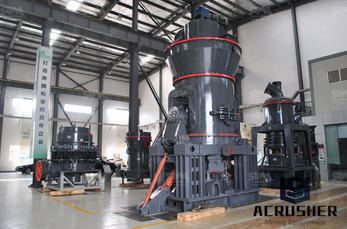
Cementation of copper is a common example. Copper ions in solution, often from an ore leaching process, are precipitated out of solution in the presence of solid iron. The iron oxidizes, and the copper ions are reduced through the transfer of electrons. The reaction is spontaneous because copper is higher on the galvanic series than iron.
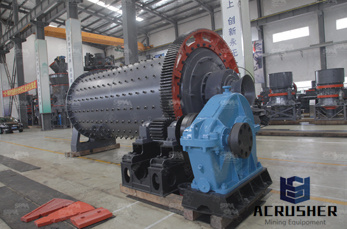
In cementation reactions the metal to be reduced from aqueous solutions is more noble, having a greater electron affinity, than the precipitating metal. For example, the recovery or metallic silver by cementation with zinc dust is an electrochemical process involving the oxidation of zinc and the reduction of the silver cyanidation.
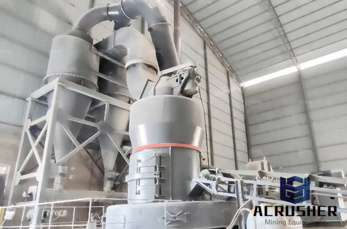
Cementation experiments were conducted on a copper and a zinc rotating disc in ammoniacal solutions with aurous ammine. Figure 7 shows the cementation behavior of gold on to a copper rotating disc at various rotation speeds. Log (rate) versus log (rad/sec) was plotted in Figure 8.

The cementation process is an obsolete technology for making steel by carburization of iron.Unlike modern steelmaking, it increased the amount of carbon in the iron. It was apparently developed before the 17th century. Derwentcote Steel Furnace, built in 1720, is the earliest surviving example of a cementation furnace.Another example in the UK is the cementation furnace in Doncaster Street ...
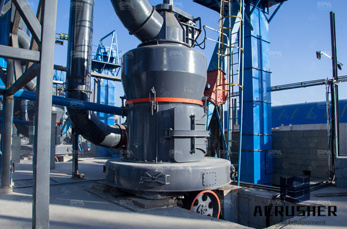
copper leaching iron cementation Copper Removal from Sulphuric Leaching Solutions by. that cementation may be used to purify the solution obtained in the sulphate leaching of a zinc sulphide concentrate after indium, iron and copper recovery by liquid-liquid extraction but before the zinc .
As cementation systems like the copper/iron or copper/zinc are known to be generally governed by mass transfer (Gros, 2010), the objective of chemical engineering is to increase both convective ...
In this work, zinc was chosen as the precipitant metal. The use of several metals for copper cementation was already studied by several authors, who reported zinc to be more effective than iron and aluminium (Demirkiran et al., 2006). In fact, zinc has a higher oxidation potential than iron and therefore is a better precipitant than iron.
Some months since, the attention of the author was directed to certain statements to the effect that the gold-contents of foul or extremely dilute cyanide-solutions could not be effectively precipitated in practice by the usual zinc cementation of gold called the "zinc-method". Such statements caused all the greater surprise, because it is well known that this difficulty is not encountered ...
Diffusion chromizing of iron after previous cementation at 950°C for 8 h completely protects iron from dissolution in liquid zinc. Diffusion chromizing of iron after previous cementation at 950°C for 8 h completely protects iron from dissolution in liquid zinc.
Gabriela V. Figueroa Martínez, José R. Parga Torres, Jesús L. Valenzuela García, Guillermo G. Tiburcio Munive, Gregorio González Zamarripa "Kinetic Aspects of Gold and Silver Becovery in Cementation with Zinc Power and Electrocoagulation Iron Process" Advances in Chemical Engineering and Science
Sep 02, 1975· In order to minimize hydrogen production when using zinc, aluminum, iron etc., as the cementing reagent, the pH of the aqueous solution should be controlled so that it is no less than about 1. Another factor that is important in controlling the cementation reaction is .
from dilute solutions by cementation on zinc using a rotating fixed bed reactor, Hydrometallurgy 89 ( 2007), 224-232. [8] M. Karavasteva, The effect of nonylphenylpolyethylene glycol on the kinetics and morphology of silver cemented using zinc, iron, copper, and .
cementation definition: 1. a cementing or being cemented 2. the process by which a solid surrounded by a metallurgical cement is heated intensely and made to combine chemically with the cement to produce a .
Sep 22, 2017· The cementation process is an obsolete technology for making steel by carburization of iron. Unlike modern steelmaking, it increased the amount of carbon in the iron. It was apparently developed ...
WhatsApp)
 Online Chat
 Sales Hotline